
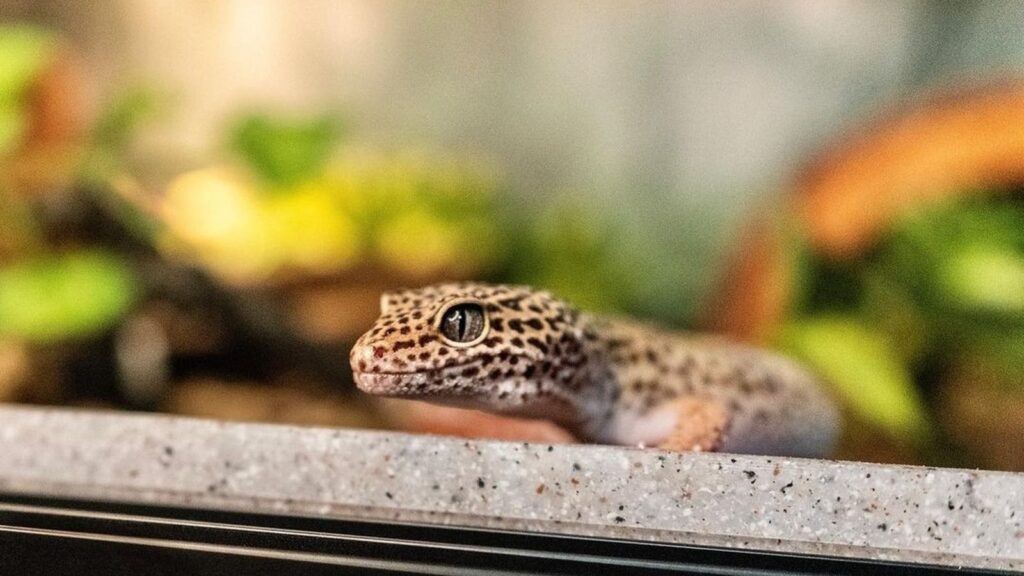
Did you know leopard geckos can live up to 20 years old under human care? With the right tools, yours can too!
This page provides insight into the leopard gecko’s preferred climate and enclosure sizes, as well as guidance on creating the ideal home for your pet.
Natural Habitat of Leopard Geckos
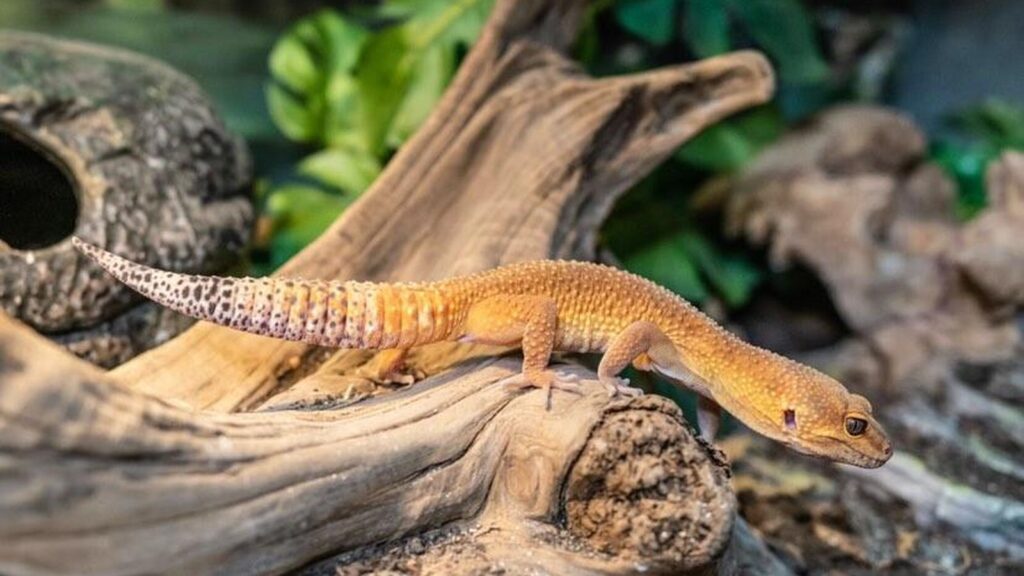
Leopard Geckos are native to semi-deserts in Afghanistan, Iraq, Iran, and northwest India. These regions have little vegetation, so you’ll commonly find them basking on rocky outcroppings or searching for food.
Leopard geckos are terrestrial, meaning they spend their time on the ground. Some geckos have sticky feet for easy climbing, but leopard geckos have small claws, which are better used for digging.
Requirements for Leopard Gecko Enclosures
Leopard Gecko Enclosure Sizes
From nose to tail, leopard geckos grow between 8 – 12 inches long. They’re relatively small but very active, so they need space to roam.
Provide an enclosure with a minimum volume of 20 gallons for baby or juvenile leopard geckos. As your pet grows, you may need a larger size, around 30 to 40 gallons.
-
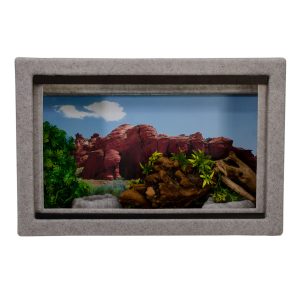 Model 111 Cage$259.00
 -
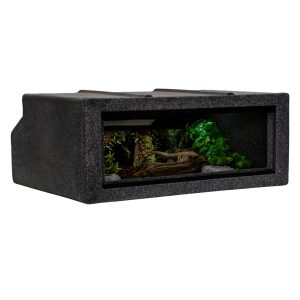 Model 221 CagePrice range: $289.00 through $389.00
 -
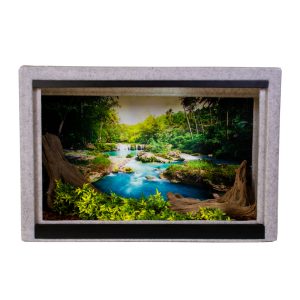 Model 215 Cage$299.00
Husbandry Tips For Leopard Geckos
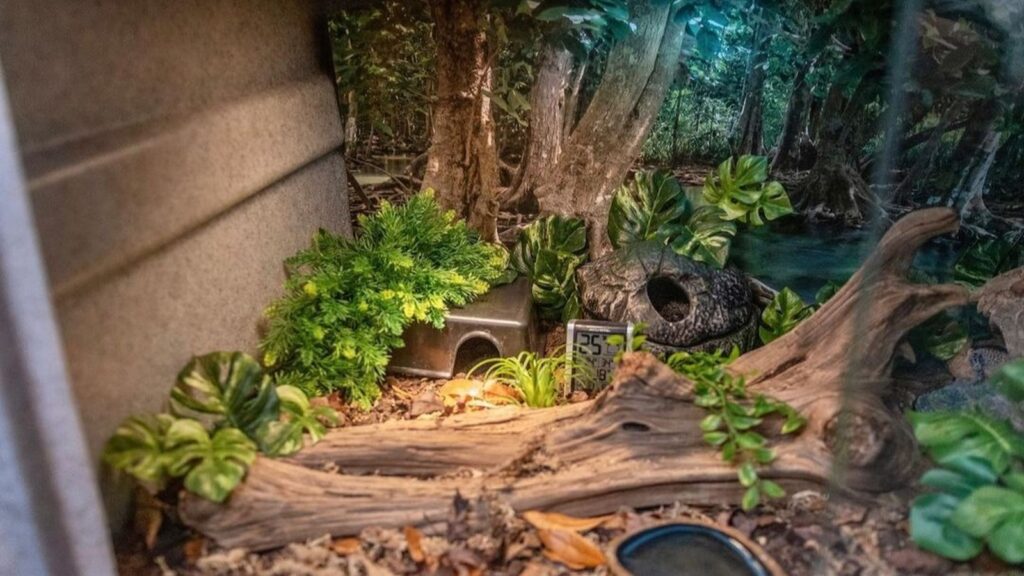
Leopard Gecko Temperature
During the day, your gecko’s cage requires a heat gradient with a cool end, a warm end, and a basking spot. At night, decrease the lights and ambient heat to mimic their natural environment.
- Cool End: 75° – 79°F
- Warm End: 81° – 85°F
- Basking Spot: 90° – 95°F
- Nighttime Temperature: 65-70°F
Lighting for Leopard Gecko Enclosures
Include light fixtures on the ceiling for heat and UVA/UVB rays. Leopard geckos are mostly nocturnal, but full-spectrum light is still crucial.
UVA light helps regulate behaviors like feeding and mating, while UVB provides vitamin D3, which helps their bodies absorb calcium.
Proper lighting also sets a clear day/night schedule; a must-have for all indoor animals.
More info in our blog: UVA/UVB Lights for Reptiles
Humidity for Leopard Geckos
A leopard gecko’s enclosure should reflect the dry climate of its habitat. Set the cage’s humidity level between 30% and 40% with our humidity-specific products.
Noticing the humidity drop below 30%? You can increase the level by spraying mist inside twice a day (once in the morning and once in the evening). Or find some substrates and automatic misters to help make your job easier.
More info in our blog: 5 Easy Ways to Control Humidity
Substrate and Bedding for Leopard Geckos
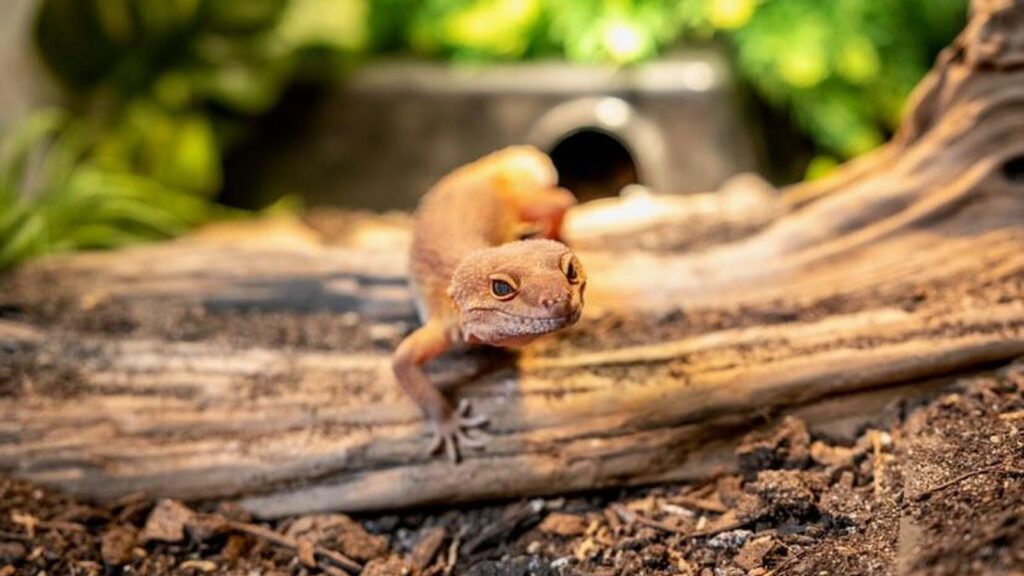
Reptile Carpet
Pros
We offer a green turf floor cover for leopard gecko enclosures. Made from 85% wool and 15% nylon, this felt is absorbent, non-ingestible, provides a good grip for leopard geckos, and is easy to clean and reuse.
Cons
A downside is that it doesn’t allow for burrowing, an activity that leopard geckos enjoy. Every situation is different, so ask us if a reptile carpet is right for your pet!
Sand
Pros
Sand-based substrates are a great option for leopard geckos. This substrate creates a natural-looking environment, absorbs moisture well, and allows for burrowing. It’s also mold-resistant, chemical-free, and a great heat conductor.
Cons
Younger geckos have been known to eat the sand accidentally, which can cause impaction. So for babies and juveniles, place their food in a shallow dish instead of on the ground.
Slate Rocks
Pros
Slate rocks are suitable for leopard gecko enclosures because the substrate can’t be consumed, it closely resembles their natural rocky habitat, retains heat, and is relatively easy to clean and replace. Add a small amount of sand between the rocks to strengthen the foundation.
Cons
A solid substrate like slate rocks make it difficult to burrow, there is less grip than sand or carpet, and traversing the rugged landscape can be harder on their joints over time, compared to one of the softer substrates.
Paper Products
Pros
Many gecko owners will use paper towels or newspapers, as well. Your pet typically won’t ingest any paper, it’s absorbent, easy to clean and replace, and much cheaper than store-bought substrates.
Cons
Like the reptile carpet, paper towels don’t allow for burrowing. The paper doesn’t provide a very scenic display, either. You will also have to replace the paper much more often than the other options.
Accessories for Leopard Gecko Enclosures
Include one or more hides in the habitat (one on the cool end, one on the warm end). Your substrate can also act as a hide if it allows for burrowing.
Also include small platforms, cedar roots, rocks, or clay molds around the enclosure. Leopard geckos are active lizards that enjoy exploring and interacting with their environment.
Lastly, offer water and food bowls so your gecko can eat and drink from fresh, clean sources.
-
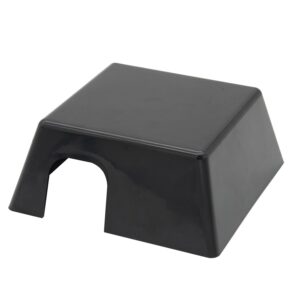 Reptile Hide$3.50
 -
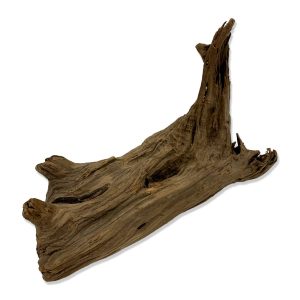 Cedar RootsPrice range: $24.95 through $59.95
 -
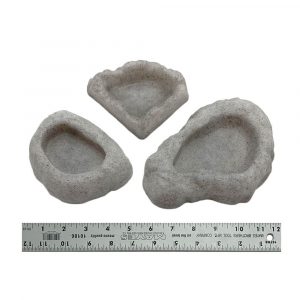 Assorted Small Reptile Bowl$9.95