
Estimated Reading Time: 6 minutes
One major aspect of a pet reptile’s well-being is the lighting conditions in their enclosure.
And when it comes to reptile lighting, two terms often come to mind: UVA and UVB.
In this post, we’ll explore the importance of UVA and UVB light for reptiles and discuss the differences between them.
The Importance of UV Light for Reptiles
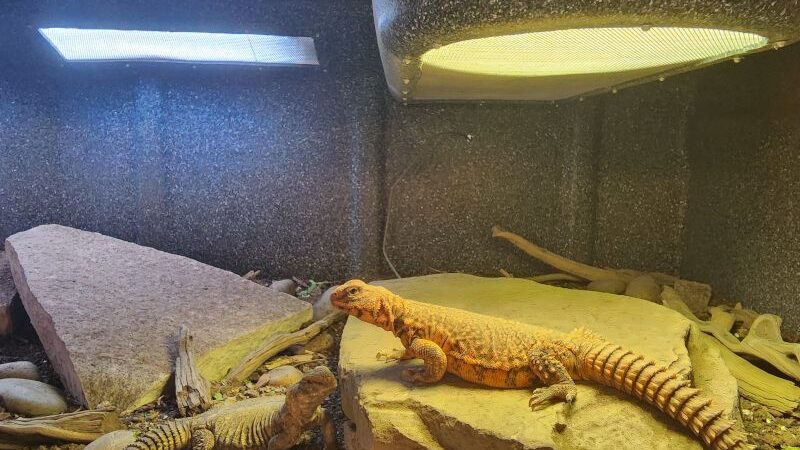
In the wild, many reptiles spend hours of their day basking in the sun’s UV rays.
Our cold-blooded buddies need the extra heat, but warmth isn’t the only benefit.
Reptiles need these UV wavelengths for a few reasons:
- To regulate normal activities
- So their bodies can produce Vitamin D3
- So they can effectively absorb calcium from the food they eat.
How can we provide our indoor reptiles with the necessary UV rays?
And what happens if your pet doesn’t receive enough?
Let’s explain.
Understanding UVA Light

UVA lighting refers to the Ultraviolet A spectrum, which is visible to the human eye. This is a crucial aspect of your reptile’s overall health and behavior.
Some benefits of UVA light for reptiles include:
- UVA light helps reptiles perceive their environment by enhancing their vision and color perception.
- Appropriate UVA levels positively influence the mood and reproductive behaviors of reptiles.
- Reptiles exposed to UVA light exhibit more natural behaviors, such as basking, hunting, and interacting with their surroundings.
- UVA light helps mimic a day and night schedule in an enclosure, which maintains their circadian rhythm, promotes regular sleep patterns, and regulates activity levels
Understanding UVB Light
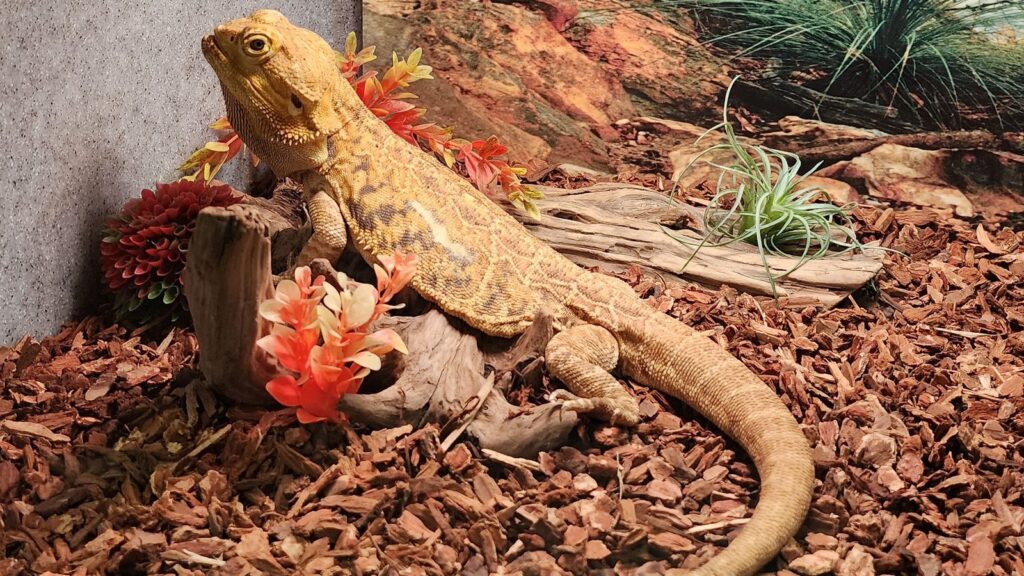
UVB lighting encompasses the ultraviolet B spectrum, which is not visible to the human eye.
Even though we can’t see it, the effects of UVB light are significant, as it’s responsible for the synthesis of vitamin D3 in reptiles’ skin.
- UVB light is crucial for reptiles’ metabolic processes. It enables them to synthesize vitamin D3 in their skin, which is essential for calcium absorption.
- Proper calcium absorption is vital for maintaining strong bones, proper muscle function, and overall health.
- Insufficient UVB exposure puts reptiles at risk of metabolic bone disease (MBD), a debilitating condition that can lead to deformities and death.
How To Provide Adequate UVA and UVB Light
Many reptile owners keep their pets indoors, which means most won’t receive enough natural UVA and UVB rays.
So, how do we provide the proper amount and type of light?
Artificial Reptile Lighting Fixtures
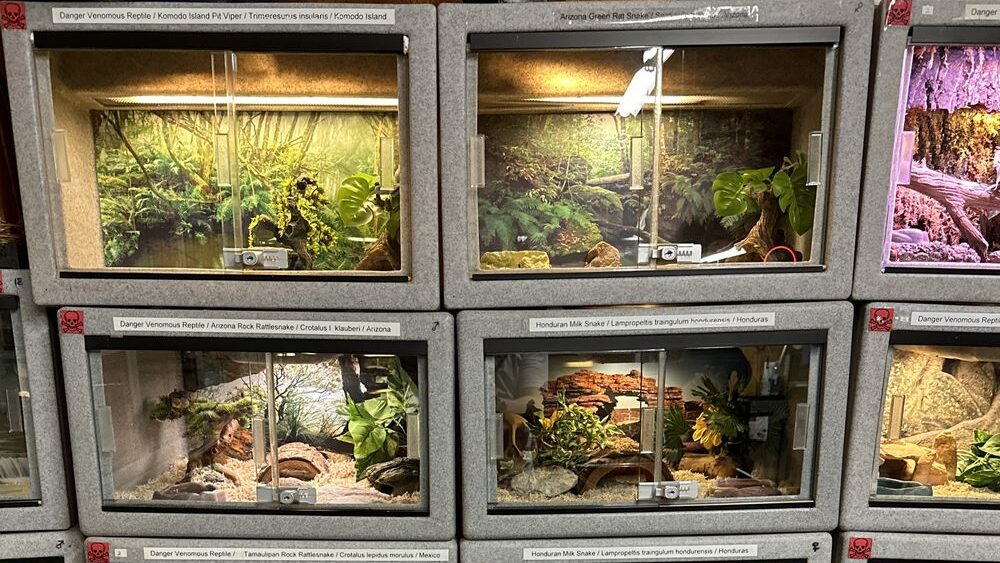
Artificial light is the most effective way to provide adequate UVA and UVB light.
Installing artificial lighting in their enclosure is quick and cost-effective; just remember that not all reptile light fixtures are created equal.
Ensure you select a fixture with full-spectrum lighting, which emits both UVA and UVB rays.
Consider adding an additional UVA fixture for more daytime light and warmth in the enclosure (depending on your pet’s needs).
Here is a list of the light and heat fixtures that we offer through our sister company, Custom Cages:
- Zoo Med 24″ Full Spectrum Replacement Bulb (UVA/UVB)
- Zoo Med 18″ Full Spectrum Replacement Bulb (UVA/UVB)
- Fluorescent Strip Fixture with Full Spectrum Light (UVA/UVB)
- Zoo Med Full Spectrum Screw in Bulb (UVA/UVB)
- Zoo Med Full Spectrum Screw in Heat Lamp (UVA/UVB)
- Zoo Med Basking Spot Lamp (UVA)
- Zoo Med Halogen Spot Lamp (UVA)
- Zoo Med Ceramic Heat Emitter (Heat Only)
Natural Sunlight
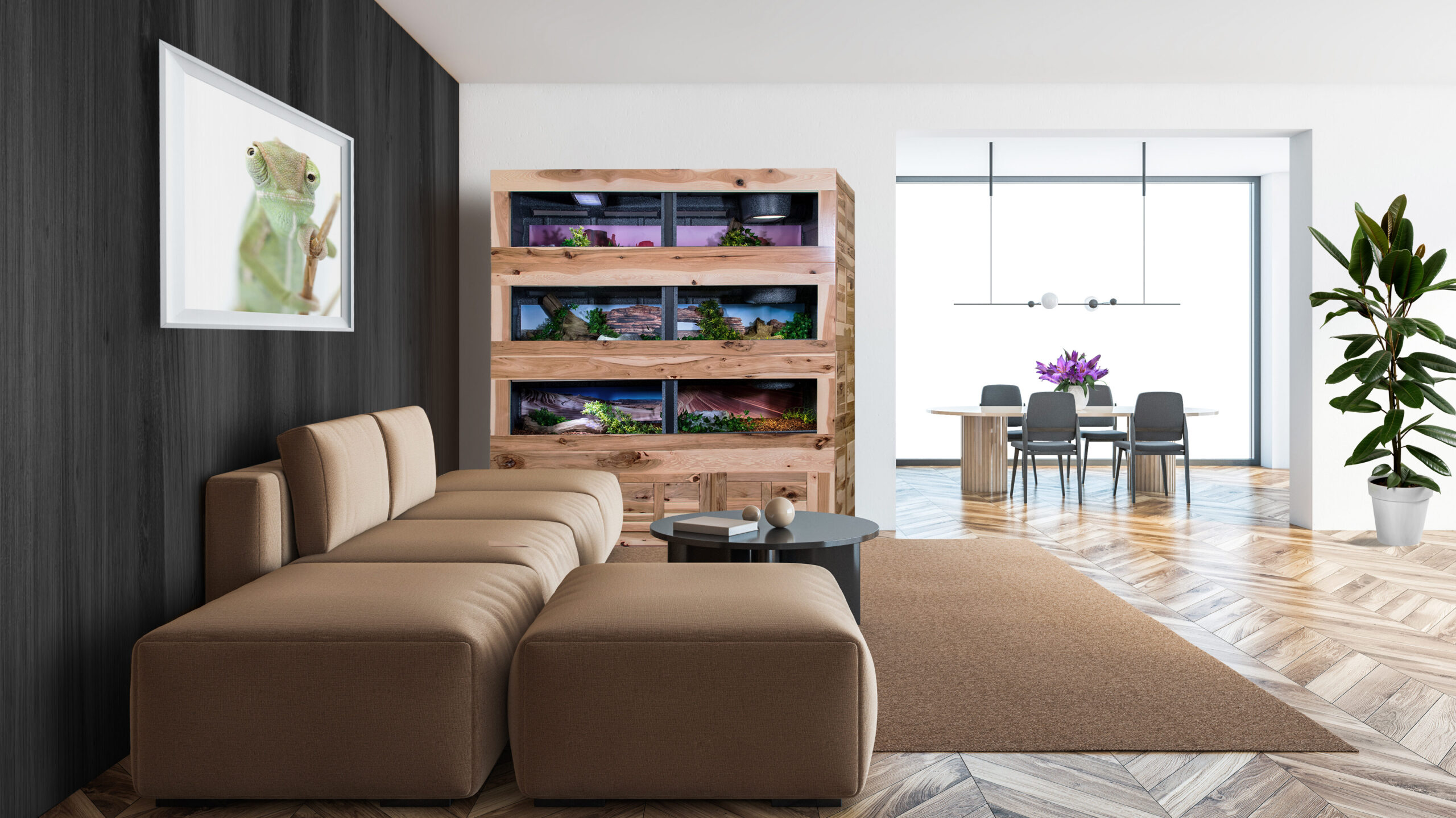
If sunlight produces the necessary UVA and UVB light for reptiles, why not just position the cage in front of the window?
The problem is that UVB rays don’t pass through glass. So while your pet may feel the warmth, the necessary UVB rays will be lacking.
How Much Light Does My Reptile Need?

The required daily UV intake, varies from species to species.
This is measured in photoperiods, which is the amount of light that a reptile receives in a day (or the duration of light in a day).
Reptiles get this naturally in the wild, so mimicking a day/night schedule is essential in their enclosure.
For many reptiles, a 12-hour photoperiod is recommended; however, always research your pet’s specific needs to confirm.
Once you know their preferred photoperiod, manually turn the lights on and off, or get a light with a timer.
Conclusion
Reptile lighting, specifically UVA and UVB light, play a significant role in your pet’s physical and behavioral health.
To review: UVA lighting regulates reptiles’ daily activities and stimulates the production of vitamin D3, while UVB lighting aids in the synthesis of this essential vitamin and promotes calcium absorption.
When setting up your reptile enclosure, it is crucial to invest in high-quality UVA and UVB bulbs that emit the appropriate light spectrums.
If you’re unsure about the lighting requirements for your pet, reach out to our experts!
We’re happy to provide any information you need to give your pet a long, happy, and healthy life.