
Estimated Reading Time: 8 minutes
Reptile Pets are Gaining Popularity in the US
In 2007, reptiles were kept as pets in 2% of US households. As of 2020, that has more than doubled to 4.5%.
We expect the reptile hobby to continue growing as Gen Zers embrace these solitary creatures. In 2018, Gen Z made up 18% of reptile owners in the US. By 2022, this had climbed to 29%.
You may want a reptile of your own, but which is the best one for you?
In this post, we’ll discuss 6 excellent reptile pets for beginners (in no particular order), based on temperament, appearance, and the level of care they require.
6 Best Reptile Pets for Beginners
1. Anoles
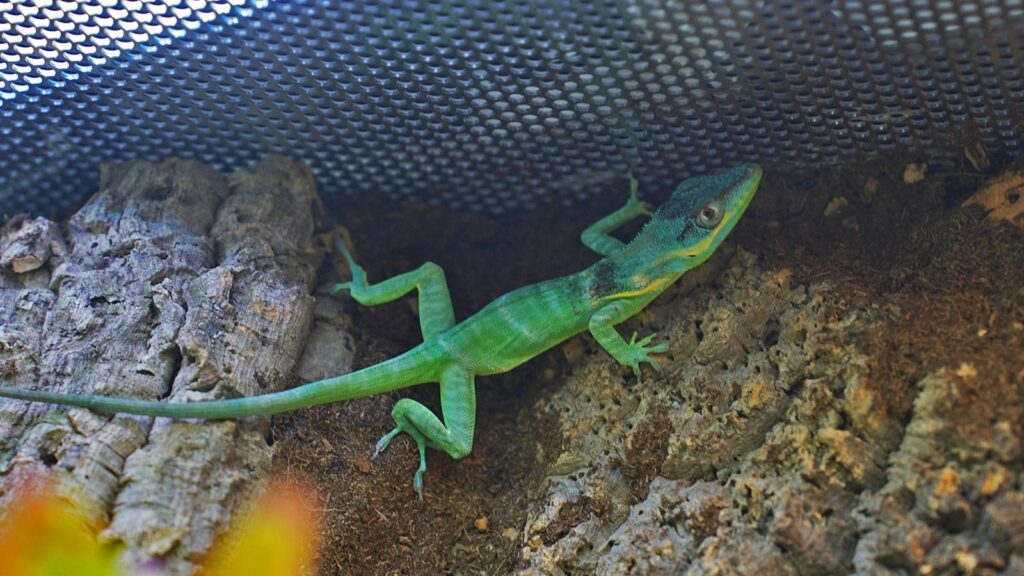
Location: North, Central, and South America
Natural Habitat: Warm and humid
Preferred Diet: Insectivorous
Temperament: Calm and docile
Lifespan under proper care: 4-8 years
The anole’s hardy and calm nature makes it a great pet for first-time owners.
These lizards are very docile and relatively low-maintenance. Plus, their adult size is around 5-7 inches, so they don’t take up much space.
That said, we recommend at least a 20-gallon enclosure for anoles.
Anoles are insectivorous, so they eat small flies, crickets, spiders, and beetles in the wild.
Before feeding your anole, consider gut-loading these insects and supplementing them with multivitamins and calcium powder.
2. Leopard Gecko
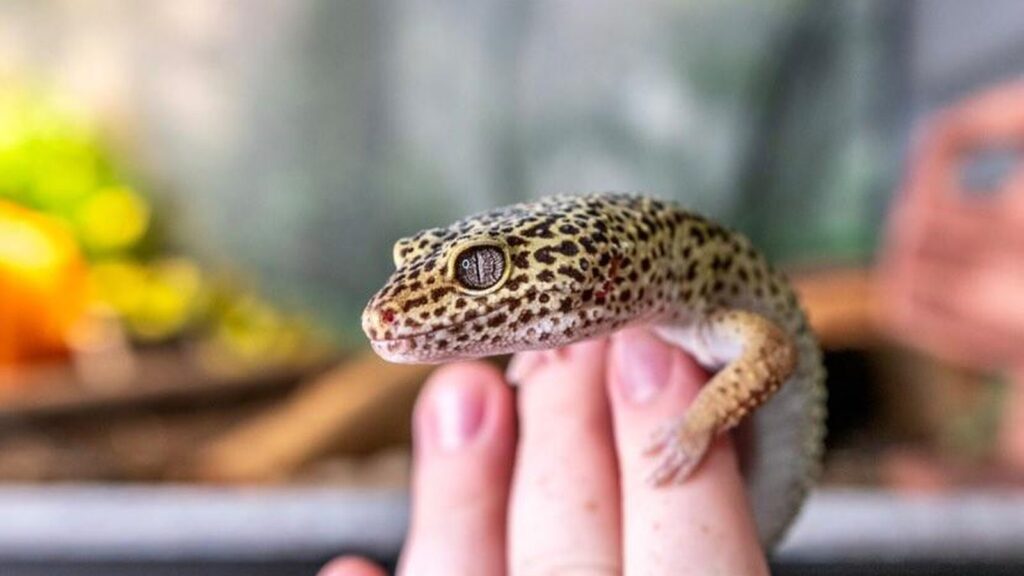
Location: Southern Asia and the Middle East
Natural Habitat: Arid, rocky semi-deserts
Preferred Diet: Insectivorous
Temperament: Calm and docile
Lifespan under proper care: 10-20 years
Their small size (7″-11″ adult size), hardiness, and ease of care make them excellent reptile pets for beginners.
In fact, Leopard Geckos can live up to 20 years under proper care!
They’re relatively active but also pretty shy, so their enclosure should include cave hides for some extra cover.
In the wild, they’re insectivores but will eat smaller lizards, snakes, and juvenile rodents.
In captivity, your pet leopard gecko will enjoy a diet of insects.
Offer gut-loaded crickets, grasshoppers, and mealworms, while also including a multivitamin and calcium supplement.
3. Bearded Dragon
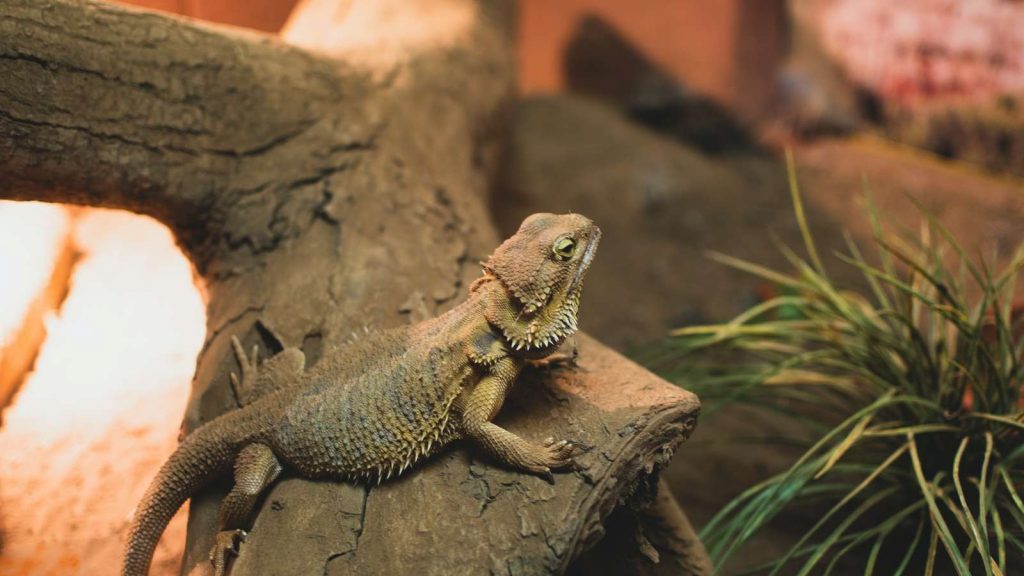
Location: Across Australia
Natural Habitat: Arid and semi-arid environments
Preferred Diet: Insectivorous
Temperament: Social and docile
Lifespan under proper care: 8-10 years
The bearded dragon is arguably the most popular pet in the reptile world.
They are generally easy to care for, don’t require much space, and are very social.
A bearded dragon enclosure requires elevated surfaces and branches for climbing, a dry substrate, and low humidity.
Unlike some reptiles, beardies are diurnal (awake during the day, asleep at night). And as they age, they become more social and accepting of being handled – perfect for younger enthusiasts!
Their diet should consist mainly of crickets, mealworms, and remember to always gut-load your feeders and add a vitamin supplement.
4. Blue Tongue Skink

Location: Australia and New Guinea
Natural Habitat: Forests, scrublands, and deserts
Preferred Diet: Omnivorous
Temperament: Calm and docile
Lifespan under proper care: 15-20 years
The blue tongue is one of the most common pet skinks because of its calm temperament and unique physical features.
Because they’re so relaxed, these skinks can be found strolling along in many suburban areas.
They are terrestrial, so they won’t need additional climbing accessories, except for an elevated basking surface.
Learn more about their temperature requirements!
Blue tongue skinks are omnivores, open to eating a variety of foods.
You can feed a juvenile skink a 50/50 mix of small insects, fruits, and veggies. As an adult, you can offer it larger insects, feeder mice, and plenty of leafy greens every two days.
5. Ball Python
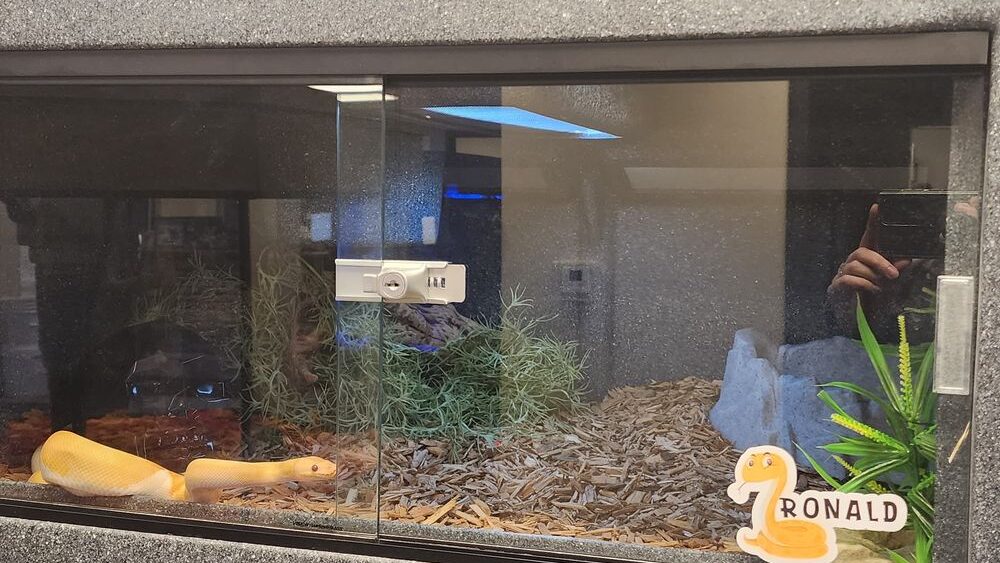
Location: Across Central Africa
Natural Habitat: Warm grasslands, savannas, and wooded areas
Preferred Diet: Carnivorous
Temperament: Shy and docile
Lifespan under proper care: 20-30 years
Ball Pythons are non-poisonous and known for being docile snakes.
They’re also somewhat shy and secluded, so if you’re looking for a snake that requires little interaction, a ball python is a good choice.
This snake grows to about 5 feet long, so you’ll need an enclosure that lets your python stretch out, climb surfaces, and burrow under a substrate.
Snakes grow fast, so instead of buying multiple enclosures as they grow, you may want to find an enclosure for an adult python, regardless of its current age/size.
Ball Pythons are relatively easy to care for, too. They will generally keep to themselves and only request food and water.
As a juvenile, you can offer pre-killed feeder mice once every 5 days. For adult ball pythons, you can feed them larger pre-killed mice and rats once every week or two. And as usual, supply the snake with fresh water every day.
6. Corn Snake

Location: North to Southeastern United States
Natural Habitat: Moderate temperatures in meadowlands, rocky hillsides, wooded groves
Preferred Diet: Carnivorous
Temperament: Calm and docile
Lifespan under proper care: 15-20 years
These snakes are one of the most popular pet snakes.
They’re recommended for beginners because of their calm temperament and ease of care. Corn snakes also grow to around 5 feet long as adults, so we recommend our Model 433 Cage.
Feeding your corn snake is pretty easy as well.
Feed a juvenile corn snake pre-killed feeder mice once per week. For an adult corn snake, offer larger pre-killed mice or rats once every two weeks.
Conclusion
These are some of the most popular repitles in our Vision Cages, and judging by their temperament, appearance, and level of care, it’s easy to see why.
Based on your preferences and experience, you might prefer a different reptile than the ones listed here.
Just make sure you have the proper accessories and equipment in place for any reptile you have. These include:
- Substrate
- Hides
- Heating
- Humidity
- Lighting
- Natural Decor
These are all essential to your pet’s health and comfort.
We offer an array of reptile cages, accessories, and climate control options.
Check out all of our reptile enclosures and accessories. You might find your reptile’s forever home!