
Estimated Reading Time: 3 minutes
The Importance of Temperature in Reptile Enclosures
Reptiles are fascinating creatures that require specific environments to thrive. One crucial factor that reptile handlers must pay attention to is the temperature in their enclosure.
Proper temperature regulation is essential for the health and well-being of our cold-blooded buddies.
In this article, we’ll explore the significance of maintaining temperatures in a reptile enclosure and provide valuable insights for reptile handlers.
Understanding the Thermoregulation Needs of Reptiles

Reptiles are ectothermic (cold-blooded) animals, relying on external heat sources to regulate their body temperature. Unlike mammals, which can generate body heat, reptiles depend on their environment to warm up or cool down.
This makes it crucial for reptile handlers to create a suitable thermal gradient within the enclosure.
A thermal gradient is the range of temperatures within a habitat. By providing different temperature zones, reptiles can move around and choose the spot that best suits their needs at that time.
This allows them to optimize their metabolism, digestion, immune system, and activity levels.
How to Maintain the Optimal Temperature Range

Different reptile species have varying temperature requirements, so handlers must understand the specific temperature range needed for their particular reptile.
Generally, reptiles require a warm side with a basking spot, along with a cooler side where they can retreat to relax and decrease their body temperature.
To achieve the optimal temperature range, you can use various heating products and reptile temperature controllers such as:
(Each link above goes to a product page on our sister company’s site, Custom Cages.)
Monitor the temperature with a reliable thermometer to ensure consistency and prevent overheating or chilling.
Potential Consequences of Incorrect Temperature Regulation
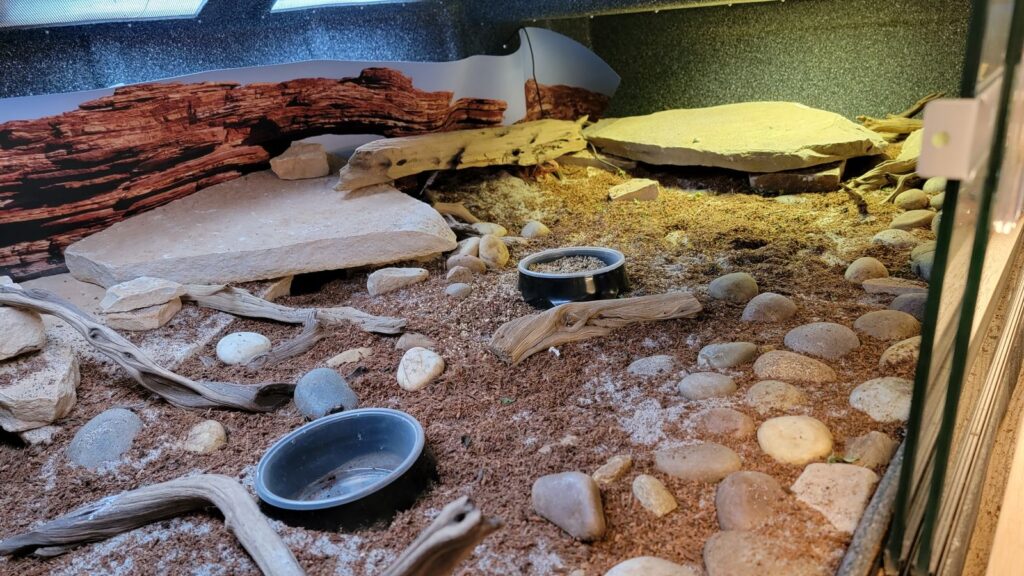
Failure to maintain the appropriate temperatures can harm your reptile physically and mentally.
Here are a few potential issues that may arise:
- Metabolic Disorders: Insufficient heat can slow a reptile’s metabolism, leading to poor digestion and nutrient absorption. Conversely, excessive heat can accelerate metabolism, causing dehydration and other metabolic disorders.
- Respiratory Problems: Inadequate temperature regulation can weaken a reptile’s immune system, making it more susceptible to respiratory infections. Cold temperatures can also impair their respiratory function, leading to breathing difficulties.
- Behavioral Issues: Reptiles rely on temperature cues to regulate their activity levels. Incorrect temperature gradients can disrupt their natural behavior patterns, causing stress, lethargy, or hyperactivity.
Conclusion
Maintaining the proper temperature range in a reptile enclosure is vital for the overall well-being of our pets.
By prioritizing temperature regulation, providing a suitable temperature gradient, and regularly monitoring it, you are taking a significant step toward a comfortable environment for your reptile and ensuring their optimal health and happiness.